Phytoplankton Sampling

May 12, 2026

Phytoplankton samples were collected on May 12, 2026 at Bullock’s Reach and analyzed in the laboratory shortly after collection.

On this day, the water temperature was 13.60 °C, the salinity was 22.93 PSU, and the chlorophyll a was 8.36 µg/L.

It was sunny and clear on this day. The qualitative tow net sample had a short filtration time and contained a large volume of copepods.

The analysis of the quantitative whole water sample revealed a total of 749,000 cells/L. The microflagellates were found at 673,000 cells/L. The most predominant phytoplankton genera were Silicoflagellate spp. at 40,000 cells/L, Skeletonema spp. at 13,000 cells/L, and Unknown Diatom spp. at 10,000 cells/L.

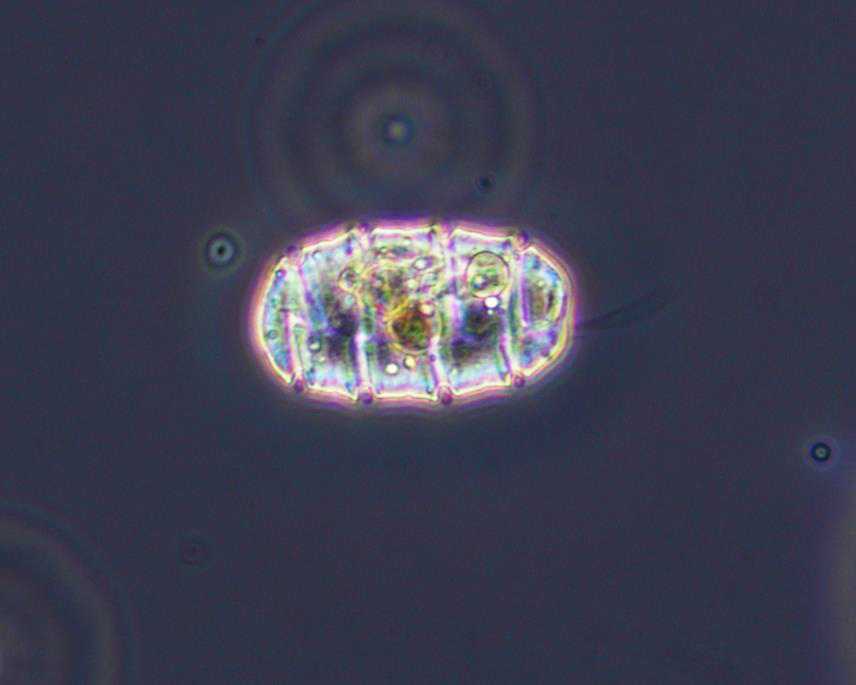
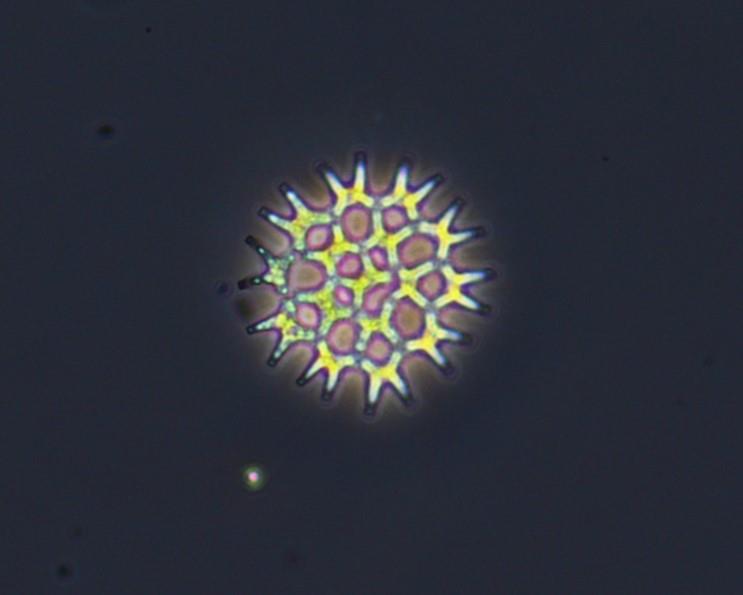
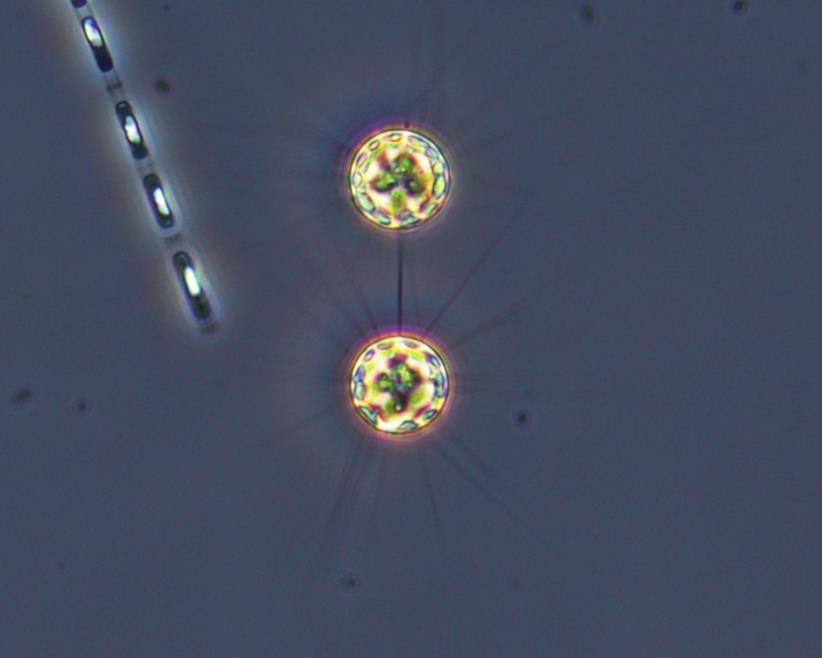
200x phase contrast image of Pediastrum spp.

Pediastrum is a genus of freshwater green algae found in lakes, ponds and along shores where water is rich in nutrients such as nitrogen. They are nonmotile and form flat colonies with concentric rings that resemble snowflakes. These groupings can both improve their buoyancy in the water column and help prevent predation.

April 29, 2026

Phytoplankton samples were collected on April 29, 2026 at Bullock Reach and analyzed in the laboratory shortly after collection.

On this day, the water temperature was 10.70 °C, the salinity was 24.63 PSU.

The qualitative tow net sample had a moderate filtration time. The filtrate was cloudy and reddish brown with some darker particulates.

The analysis of the quantitative whole water sample revealed a total of 2,224,000 cells/L. The microflagellates were found at 194,000 cells/L. The most predominant phytoplankton genera were Skeletonema spp. at 1,694,000 cells/L, Thalassiosira spp. at 128,000 cells/L, and Chaetoceros spp.at 92,000 cells/L.

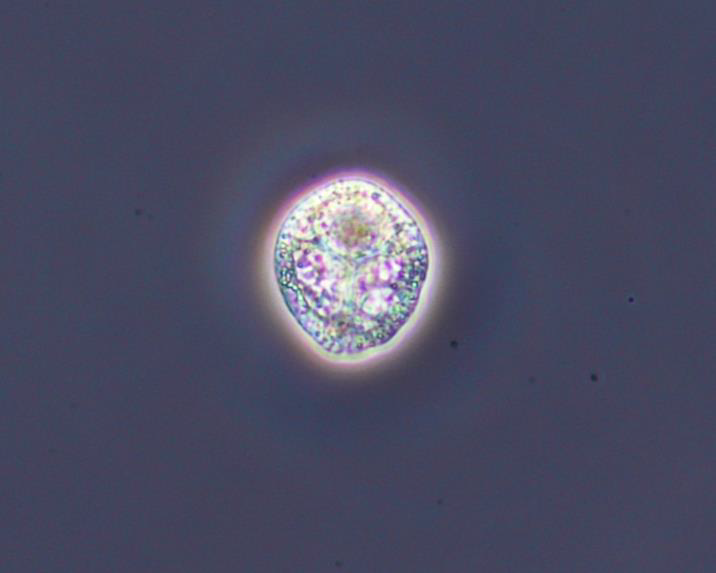
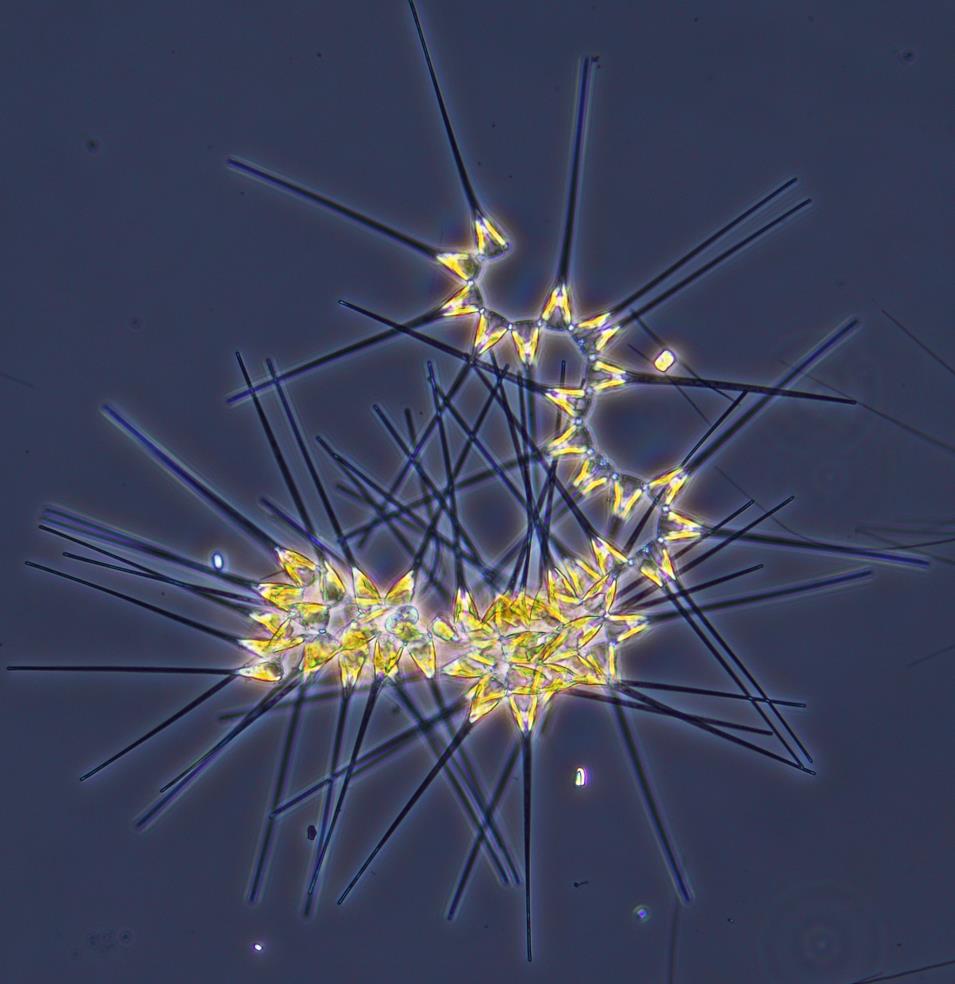
200x phase contrast image of Asterionellopsis spp.

Asterionellopsis is a genus of neritic pennate diatom found in cold to temperate coastal waters. Their cells have two chloroplasts each and are joined by valve faces into star-shaped or spiraling chains.

April 15, 2026

Phytoplankton samples were collected on April 15, 2026 at Bullock Reach and analyzed in the laboratory shortly after collection.

It was sunny with light wind on this day. The water temperature was 12.66 °C, the salinity was 19.05 PSU, and the chlorophyll a was 15.54 ug/L.

The qualitative tow net sample had a moderate filtration time. The filtrate was cloudy and reddish brown.

The analysis of the quantitative whole water sample revealed a total of 37,240,000 cells/L. The microflagellates were found at 320,000 cells/L. The most predominant phytoplankton genera were Skeletonema spp. at 33,763,000 cells/L, Chaetoceros spp. at 1,653,000 cells/L, and Leptocylindrus spp. at 765,000 cells/L.

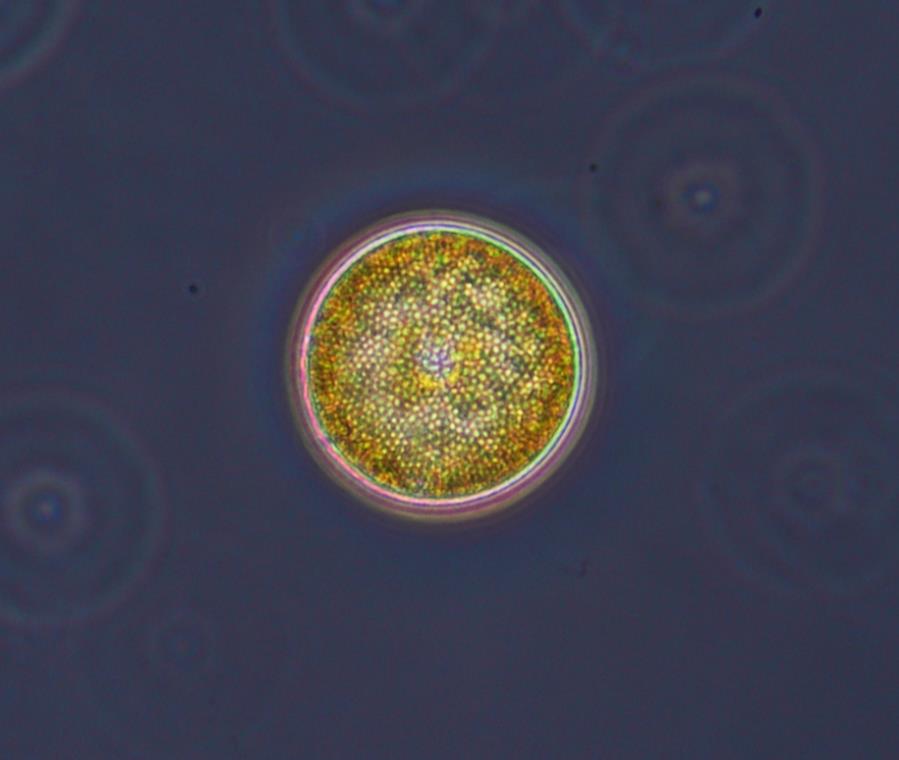
200x phase contrast image of Thalassiosira spp.

Thalassiosira is a large genus of mostly marine diatoms which are known for their bloom formations. They are responsible for significant algal blooms worldwide in temperate, boreal, and polar regions, particularly in layers underlying sea ice and in upwelling areas.

October 15, 2025

Phytoplankton samples were collected on October 15, 2025 at Bullock’s Reach and analyzed in the laboratory shortly after collection.

It was sunny and windy on this day. The water temperature was 16.13 °C and the salinity was 26.53 psu.

The qualitative tow net sample had a short to moderate filtration time. The filtrate was light tan and contained some dark precipitates.

The analysis of the quantitative whole water sample revealed a total of 69,000 cells/L. The microflagellates were found at 30,000 cells/L. The most predominant phytoplankton genera were Chaetoceros spp. at 31,000 cells/L, Prorocentrum spp. at 3,000 cells/L, and pennate diatoms at 3,000 cells/L.

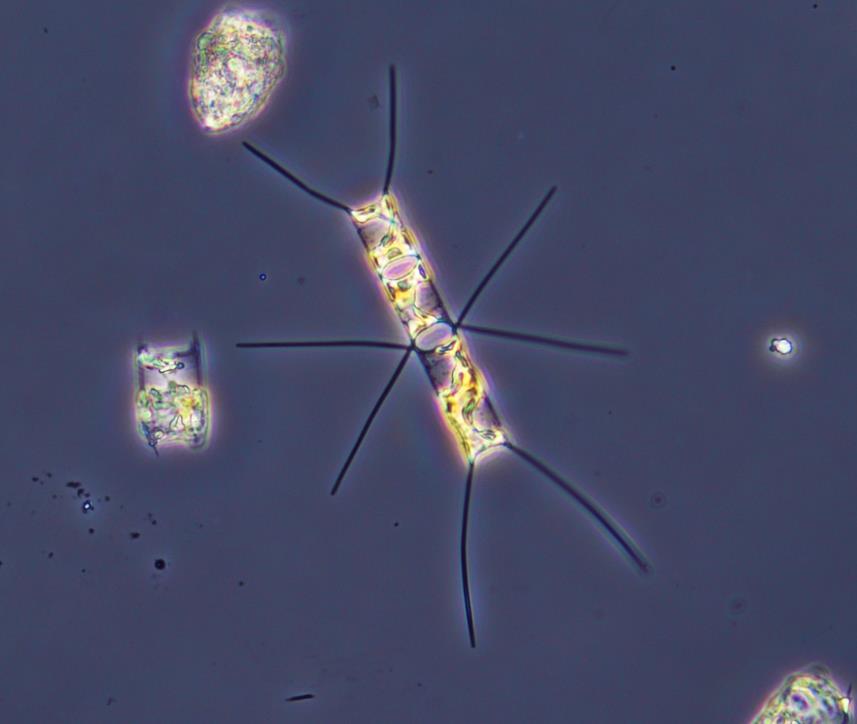
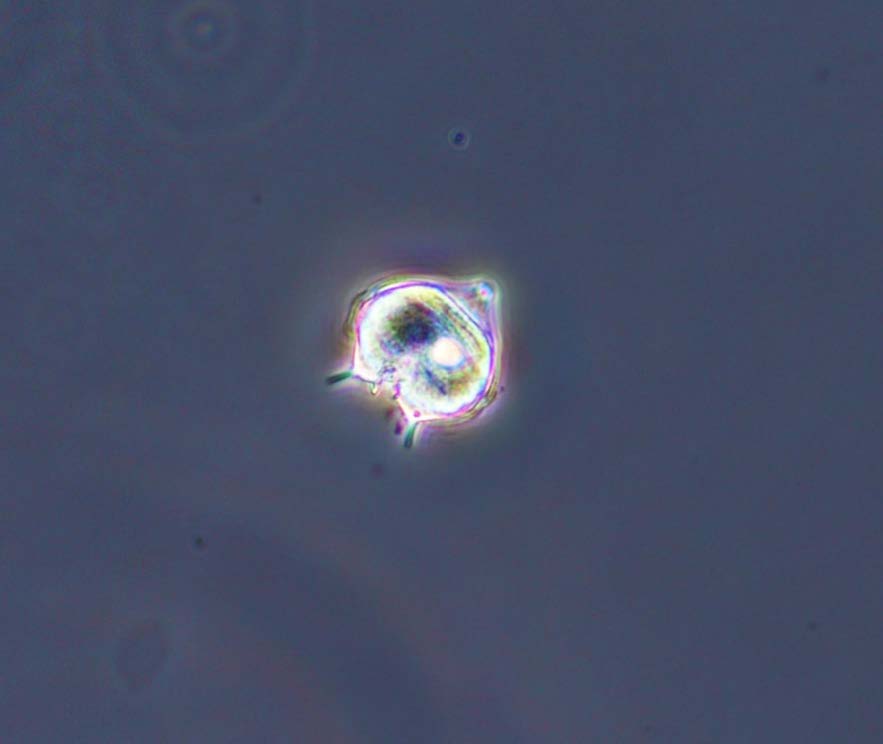
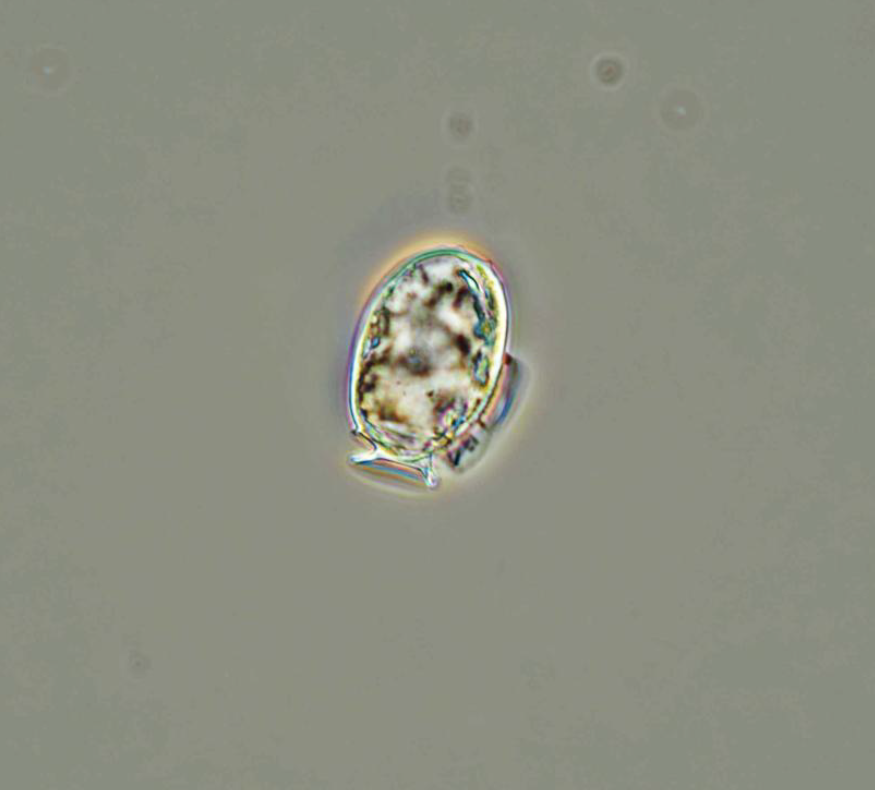
400x phase contrast image of Dinophysis acuminata

Dinophysis acuminata is a marine phytoplankton species of dinoflagellates that is found in the coastal waters of Rhode Island and north Atlantic waters. This is one of several phototrophic species that are classed as toxic, as they produce okadaic acid which can cause diarrhetic shellfish poisoning (DSP).

October 1, 2025

Phytoplankton samples were collected on October 1, 2025 at Bullock’s Reach and analyzed in the laboratory shortly after collection.

It was sunny and breezy on this day. The water temperature was 20.14 °C, the salinity was 30.14 psu, and the chlorophyll a was 4.28 ug/L.

The qualitative tow net sample had a short to moderate filtration time. The filtrate was dark brown and contained some jellyfish.

The analysis of the quantitative whole water sample revealed a total of 509,000 cells/L. The microflagellates were found at 197,000 cells/L. The most predominant phytoplankton genera were Cerataulina spp. at 85,000 cells/L, Chaetoceros spp. at 65,000 cells/L, and Ditylum spp. at 32,000 cells/L.

200x phase contrast image of Thalassiosira spp.

Thalassiosira is a genus of centric diatoms that are vital primary producers in temperate and polar seas. They can thrive in low temperature and light, as well as mixed waters, which allows them to play a large part in spring diatom blooms. They are also able to defend themselves against zooplankton, allowing them to survive the predation that normally keeps phytoplankton blooms in check.

September 17, 2025

Phytoplankton samples were collected on September 17, 2025 at Bullock’s Reach and analyzed in the laboratory shortly after collection.

The water temperature was 20.99 °C, the salinity was 31.07 psu, and the chlorophyll a was 13.57 ug/L.

The qualitative tow net sample had a quick filtration time. The filtrate was reddish brown and murky.

The analysis of the quantitative whole water sample revealed a total of 1,014,000 cells/L. The microflagellates were found at 374,000 cells/L. The most predominant phytoplankton genera were Chaetoceros spp. at 303,000 cells/L, Prorocentrum spp. at 168,000 cells/L, and Heterocapsa spp. at 46,000 cells/L.

200x phase contrast image of Gymnodinium spp.

Gymnodinium is a genus of marine and freshwater dinoflagellates. They have two flagella used for locomotion and they are one of the few dinoflagellates that appear ‘naked’ due to their lack of armored cellulosic plates. Some species produce saxitoxins which can cause paralytic shellfish poisoning.

September 3, 2025

Phytoplankton samples were collected on September 3, 2025 at Bullock’s Reach and analyzed in the laboratory shortly after collection.

It was sunny, calm and warm on this day. The water temperature was 21.83 °C, the salinity was 30.37 psu, and the chlorophyll a was 4.82 ug/L.

The qualitative tow net sample had a moderate filtration time. The filtrate was dark brown and cloudy with sediment.

The analysis of the quantitative whole water sample revealed a total of 1,096,000 cells/L. The microflagellates were found at 560,000 cells/L. The most predominant phytoplankton genera were Leptocylindrus spp. at 177,000 cells/L, Skeletonema spp. at 107,000 cells/L, and Chaetoceros spp. at 83,000 cells/L.

200x phase contrast image of Scrippsiella spp.

Scrippsiella spp. is a genus of pear-shaped, cosmopolitan dinoflagellates found in coastal temperate waters. They are able to form harmful algal blooms that lead to water discoloration. They are also efficient cyst producers, which act as a benthic reservoir of the vegetative population and contribute to the dinoflagellate’s success in a neritic environment.

August 20, 2025

Phytoplankton samples were collected on August 20, 2025 at Bullock’s Reach and analyzed in the laboratory shortly after collection.

The water temperature was 23.1 °C, the salinity was 20.4 psu, and the chlorophyll a was 64.01ug/L

The qualitative tow net sample had a long filtration time. The filtrate was murky and dark brown. An aroma of seaweed was also noted in this sample.

The analysis of the quantitative whole water sample revealed a total of 2,015,000 cells/L. The most predominant phytoplankton genera were Leptocylindrus spp. at 995,000 cells/L, Skeletonema spp. at 390,000 cells/L, and Chaetoceros spp. at 350,000 cells/L.

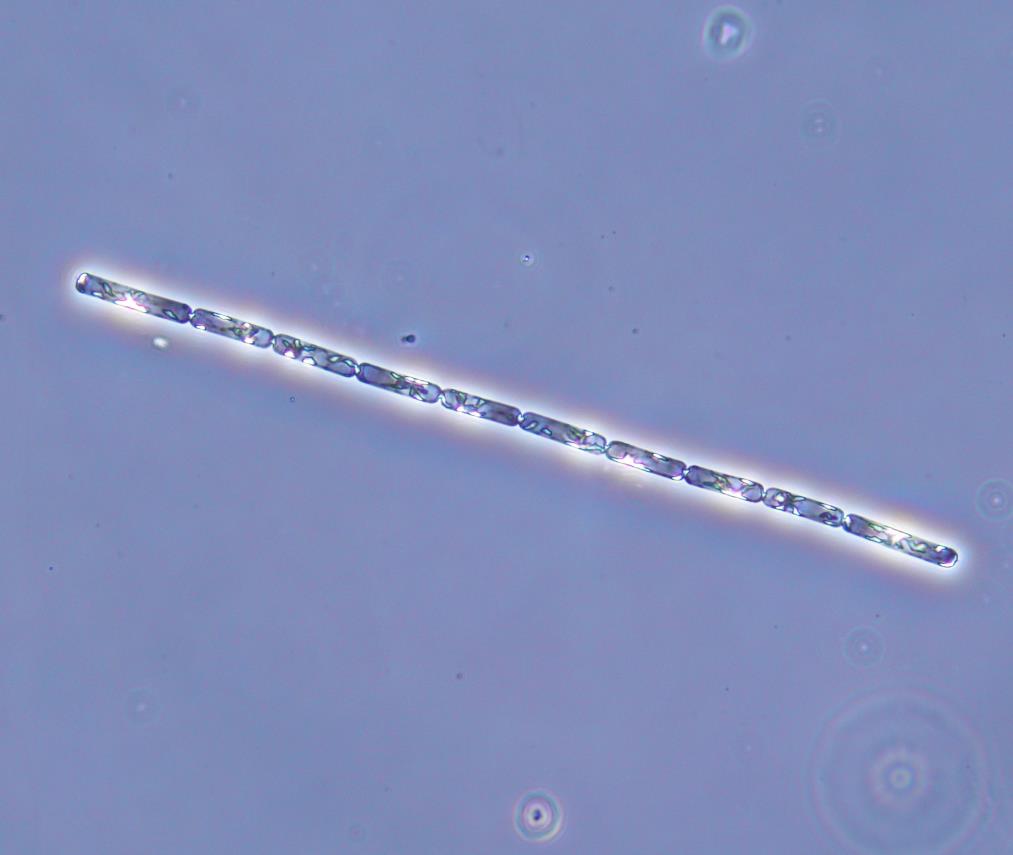
200x phase contrast image of Thalassionema spp.

Thalassionema is a small genus of mostly marine diatoms which form zig-zag or fan-shaped colonies of rectangular cells. They are commonly found in nutrient-rich upwelling regions and their presence indicates conditions of high productivity.

July 23, 2025

Phytoplankton samples were collected on July 23, 2025 at Bullock’s Reach and analyzed in the laboratory shortly after collection.

The water temperature was 23.72 °C, the salinity was 28.61 psu, and the chlorophyll a was 7.18 ug/L.

The qualitative tow net sample had a medium filtration time. The filtrate was clear with a light brown greenish coloration. Many comb jellies were detected in this sample.

The analysis of the quantitative whole water sample revealed a total of 4,386,000 cells/L. The microflagellates were found at 40,000 cells/L. The most predominant phytoplankton genera were Cylindrotheca spp. at 2,055,000 cells/L, Skeletonema spp. at 860,000 cells/L, and Leptocylindrus spp. at 840,000 cells/L.

200x phase contrast image of dinoflagellate Protoperidinium spp.

Protoperidinium spp. is a marine phytoplankton belonging to a family of armored dinoflagellates that are characterized by horns and spikes. They are heterotrophic predators who feed on other smaller organisms for nutrients. With the help of chloroplasts, these tiny creatures can produce their own nutrients with photosynthesis.

July 8, 2025

Phytoplankton samples were collected on July 8, 2025 at Bullock’s Reach and analyzed in the laboratory shortly after collection.

It was sunny, hot, and humid on this day. The water temperature was 25.24 °C, the salinity was 27.85 psu, and the chlorophyll a was 5.55 ug/L.

The qualitative tow net sample had a quick filtration time. The filtrate contained seaweed and particulates and had a reddish brown coloration.

The analysis of the quantitative whole water sample revealed a total of 875,000 cells/L. The microflagellates were found at 268,000 cells/L. The most predominant phytoplankton genera were Prorocentrum spp. at 284,000 cells/L , and Thalassiosira spp. at 198,000 cells/L.

200x phase contrast micrograph of Monogonontan Rotifer

Rotifers of the subclass Monogononta are common metazoans found in freshwater, brackish and marine environments. Although they are small, ranging in size from 50–500 µm, they are extremely important in the transfer of energy from algae, microbes, and detritus to higher trophic levels in community food webs.

Scroll to Top