Phytoplankton Sampling

June 25, 2025

Phytoplankton samples were collected on June 25, 2025 at Bullock’s Reach and analyzed in the laboratory shortly after collection.

The water temperature was 24.98 °C, the salinity was 24.10 psu, and the chlorophyll a was 8.14 ug/L.

The qualitative tow net sample had a long filtration time. The filtrate contained jellyfish and had a golden brown coloration.

The analysis of the quantitative whole water sample revealed a total of 1,501,000 cells/L. The microflagellates were found at 330,000 cells/L. The most predominant phytoplankton genera were Cerataulina spp. at 437,000 cells/L, Skeletonema spp. at 287,000 cells/L, and Heterocapsa spp. at 147,000 cells/L.

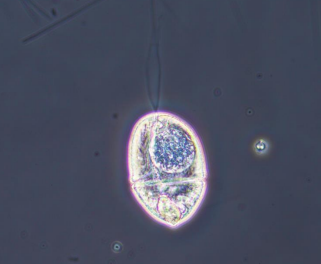
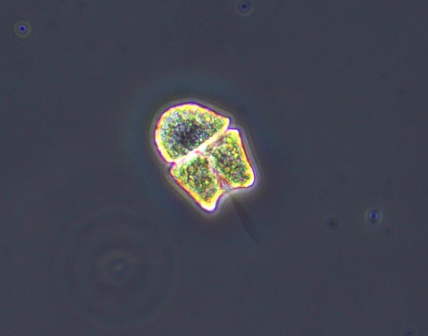
200x phase contrast micrograph of Akashiwo sanguinea

Akashiwo sanguinea is a planktonic dinoflagellate which lives as a single cell and uses one flagellum for locomotion. These dinoflagellates are mixotrophic, which means they can use different sources for energy and carbon uptake. They are photosynthetic, containing a large number of chloroplasts radiating from the center of the cell, and also prey on various types of smaller organisms.

June 11, 2025

Phytoplankton samples were collected on June 11, 2025 at Bullock’s Reach and analyzed in the laboratory shortly after collection.

The water temperature was 18.0 °C, the salinity was 21.28 psu, and the chlorophyll a was 4.24 ug/L.

The qualitative tow net sample had a moderate filtration time. The filtrate had a medium brown/green coloration.

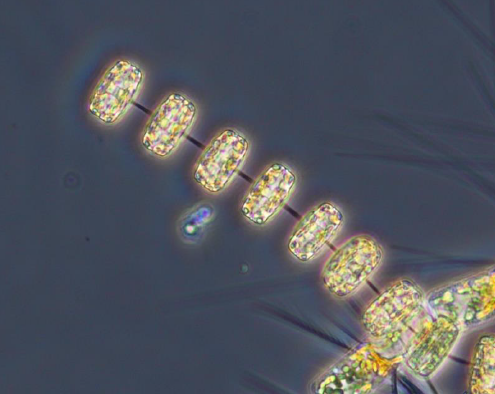
The analysis of the quantitative whole water sample revealed a total of 5,517,000 cells/L. The microflagellates were found at 112,000 cells/L. The most predominant phytoplankton genera were Guinardia spp. at 1,652,000 cells/L, Chaetoceros spp. at 1,448,000 cells/L, and Leptocylindrus spp. at 1,044,000 cells/L.

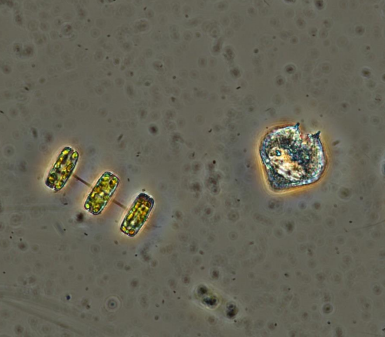
200x phase contrast micrograph of phytoplankton

May 14, 2025

Phytoplankton samples were collected on May 14, 2025 at Bullock’s Reach and analyzed in the laboratory shortly after collection.

The water temperature was 16.64 degrees Celsius, and the salinity was 13.43 psu. The qualitative tow net sample had a quick filtration time and the filtrate was mostly clear in appearance.

The analysis of the quantitative whole water sample revealed a total of 1,158,000 cells/L. The microflagellates were found at 307,000 cells/L. The most predominant phytoplankton genera were Dinoflagellate spp. at 523,000 cells/L, Skeletonema spp. at 290,000 cells/L, and Chaetoceros spp. at 20,000 cells/L.

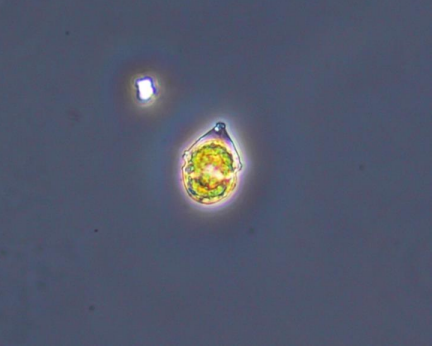
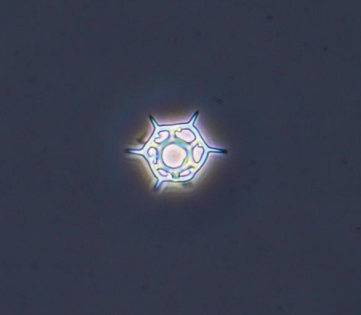
200x phase contrast micrograph of Dictyocha spp.

Dictyocha is a genus of silicoflagellates, which are marine photosynthetic unicellular protists that take the form of either flagellates or axopodial amoebae. Many important species of phytoplankton belong to this genus, and some of them are responsible for algal blooms that are toxic to fish. Silicoflagellates are most commonly found in inshore waters, though they can also be found in temperate, polar, coastal and oceanic regions.

April 17, 2025

Phytoplankton samples were collected on April 17, 2025 at Bullock Reach and analyzed in the laboratory shortly after collection.

It was sunny, clear and breezy on this day. The water temperature was 6.11 degrees Celsius, and Sonde data was not recorded.

The qualitative tow net sample had a moderate filtration time and the filtrate was golden brown with some particulates.

The analysis of the quantitative whole water sample revealed a total of 590,000 cells/L. The microflagellates were found at 337,000 cells/L. The most predominant phytoplankton genera were Dinoflagellate spp. at 93,000 cells/L, Thalassiosira spp. at 44,000 cells/L, and Chaetoceros spp. at 43,000 cells/L.

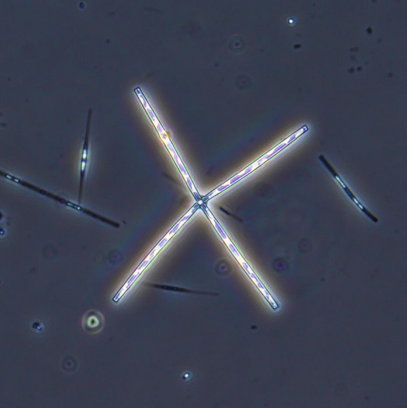
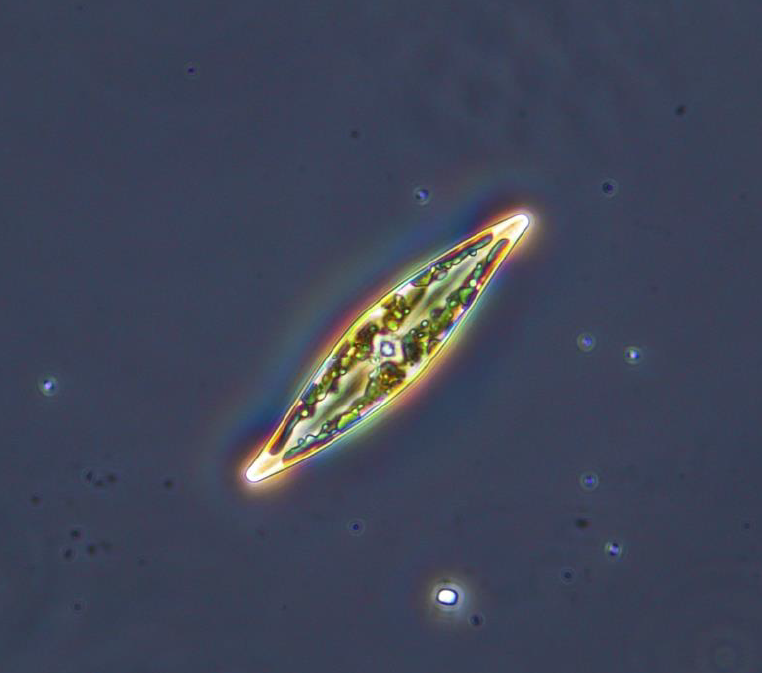
200x phase contrast micrograph of Pleurosigma spp.

Pleurosigma is a genus of marine pelagic diatoms which are shaped like an elongated diamond. They are present throughout the world and breed particularly well in bays, inlets and ports. These diatoms are motile, and they employ a pulsating of the body to induce gliding movement as well as occasional circular rotations around one end of the organism to change course.

March 19, 2025

Phytoplankton samples were collected on March 19, 2025 at Bullock Reach and analyzed in the laboratory shortly after collection.

It was sunny and cold on this day. The water temperature was 6.6 degrees Celsius, and jellyfish were observed. Sonde data was not recorded.

The qualitative tow net sample had a moderate to long filtration time and the filtrate was cloudy and dark brown with a large amount of sediment.

The analysis of the quantitative whole water sample revealed a total of 4,744,000 cells/L. The microflagellates were found at 86,000 cells/L. The most predominant phytoplankton genera were Leptocylindrus spp. at 2,918,000 cells/L, Chaetoceros spp. at 1,474,000 cells/L, and Skeletonema spp. at 144,000 cells/L.

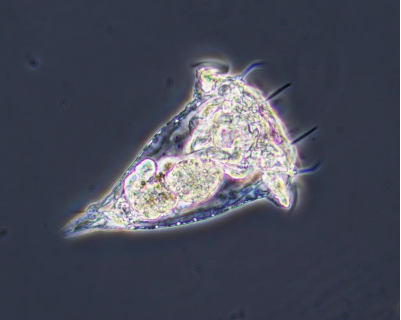
200x phase contrast micrograph of Pyrocystis spp.

Pyrocystis spp., shown here in a 200x phase contrast micrograph, are non-motile, tropical, epipelagic marine dinoflagellates. They exhibit bioluminescence, which means emitting light through a chemical reaction, when they are disturbed or agitated. This is an unusual defense mechanism against predation which aims to startle grazers who would otherwise eat them.

November 14, 2024

Phytoplankton samples were collected on November 14, 2024 at Bullock Reach and analyzed in the laboratory shortly after collection.

It was partly sunny, windy and cold on this day. Sonde data was not recorded.

The qualitative tow net sample had a quick filtration time and the filtrate contained some light brown particulates and plant matter.

The analysis of the quantitative whole water sample revealed a total of 288,000 cells/L. The microflagellates were found at 30,000 cells/L. The most predominant phytoplankton genera were Chaetoceros spp. at 34,000 cells/L, Leptocylindrus spp. at 76,000 cells/L, and Heterocapsa spp. at 26,000 cells/L.

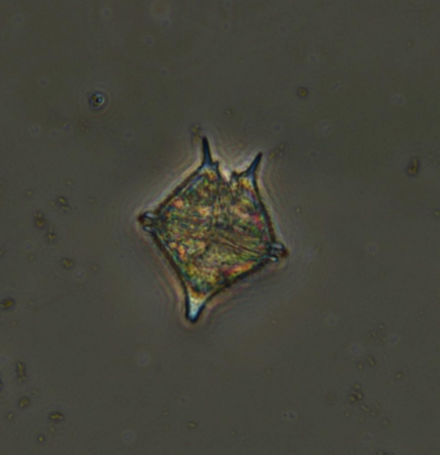
200x phase contrast micrograph of Staurastrum spp.

Staurastrum, shown here in a 200x phase contrast micrograph, is a large genus of microscopic green algae which are closely related to land plants. They are found in freshwater habitats around the world and live primarily in acidic lakes, ponds and swamps with low nutrient levels. Many Staurastrum species serve as indicators of eutrophic conditions.

October 30, 2024

Phytoplankton samples were collected on October 30, 2024 at Bullock’s Reach and analyzed in the laboratory shortly after collection. Weather conditions and Sonde data were not recorded on this day. The qualitative tow net sample had a moderate filtration time. The filtrate was slightly cloudy with some golden brown particulates. The analysis of the quantitative whole water sample revealed a total of 260,000 cells/L. The microflagellates were found at 100,000 cells/L. The most predominant phytoplankton genera were Chaetoceros spp. at 104,000 cells/L, Leptocylindrus spp. at 26,000 cells/L, and Skeletonema spp. at 18,000 cells/L. Proboscia alata, shown here in a 100x phase contrast micrograph, is a solitary or chain-forming diatom that can measure up to 1mm in length. They are identified by the presence of a proboscis with a truncated tip and offset claspers. These diatoms are an oceanic, temperate water species and are sometimes found near the coast.

October 17, 2024

Phytoplankton samples were collected on October 17, 2024 at Bullock’s Reach and analyzed in the laboratory shortly after collection. It was windy and brisk on Narragansett Bay. Sonde data revealed the surface water temperature was 14.63°C, salinity was 30.01 psu, and chlorophyll a was 2.58 ug/L. The qualitative tow net sample had a quick filtration time and the filtrate was clear. The analysis of the quantitative whole water sample revealed a total of 156,000 cells/L. The microflagellates were found at 48,000 cells/L. The most predominant phytoplankton genera were Prorocentrum spp. at 38,000 cells/L, Leptocylindrus spp. at 16,000 cells/L, and Cylindrotheca spp. at 12,000 cells/L. Corethron hystrix, shown here in a 200x phase contrast micrograph, is a solitary species of centric diatom found in the North Atlantic and North Pacific, typically in the spring and fall. They have a unique pill shape and two rings of long spines directed towards one end, and a crown of shorter, hooked spines pointed in the opposite direction. Although they do not bloom in large numbers, it has been observed that they may cause physical obstructions in the gills of farmed salmon.

October 3, 2024

​Phytoplankton samples were collected on October 3, 2024 at Bullock’s Reach and analyzed in the laboratory shortly after collection. Weather conditions and Sonde data were not recorded on this day. The qualitative tow net sample had a quick filtration time. The filtrate was slightly cloudy and reddish brown with some particulates. The analysis of the quantitative whole water sample revealed a total of 1,712,000 cells/L. The microflagellates were found at 112,000 cells/L. The most predominant phytoplankton genera were Heterocapsa spp. at 1,232,000 cells/L, Prorocentrum spp. at 108,000 cells/L, and Leptocylindrus spp. at 100,000 cells/L. Chaetoceros socialis, shown here in a 100x phase contrast micrograph, is a species of diatom belonging to one of the most diverse genera of marine planktonic organisms. Due to their high growth rates, research on the use of Chaetoceros species in biotechnology is ongoing. They are currently used in commercial aquacultures and studies suggest that they have enormous potential for producing biofuel.

September 4, 2024

Phytoplankton samples were collected on September 4, 2024 at Bullock Reach and analyzed in the laboratory shortly after collection. ​It was a sunny, calm and cloudless day on Narragansett Bay. Sonde data was not analyzed on this day. The qualitative tow net sample had a quick filtration time, the filtrate was slightly cloudy and golden brown with some black particulates. The analysis of the quantitative whole water sample revealed a total of 874,000 cells/L. The microflagellates were found at 94,000 cells/L. The most predominant phytoplankton genera were Skeletonema spp. at 240,000 cells/L, Leptocylindrus spp. at 224,000 cells/L, and Cylindrotheca spp. at 188,000 cells/L. Pleurosigma, shown here in a 200x phase contrast micrograph, is a widely distributed genus of elongate, biraphid diatoms which glide and rotate in brackish to marine waters. They are pelagic and either float on the tides, sink to lower levels on top of the salt layer or attach to marine organisms. These diatoms contribute to essential oxygen levels in the ocean and also serve as a food source for animal larvae and dinoflagellates.​​

Scroll to Top