
Surface Mapping

April 29, 2026

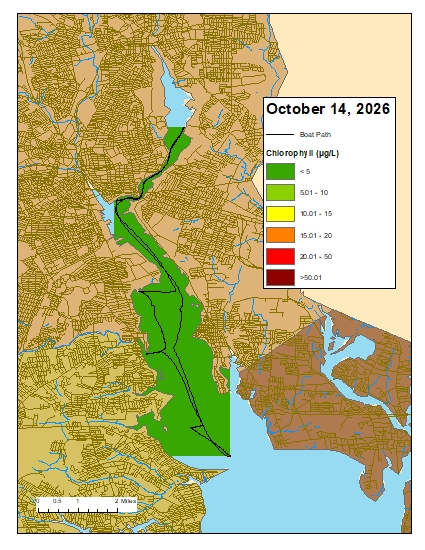
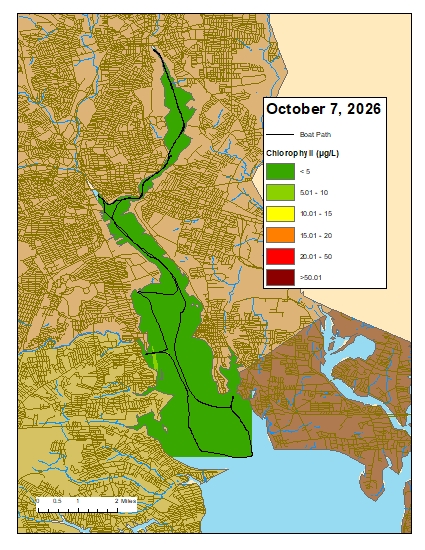
Surface chlorophyll data were collected on April 29, 2026, while the R/V Data Stream was underway collecting nutrient samples in the Providence and Seekonk River Estuaries. The average chlorophyll concentrations were categorized as good in all areas. The average chlorophyll concentrations were categorized as good to fair over all areas surveyed. Overall, chlorophyll ranged from 1.50 µg/L to 14.60 µg/L with an average of 4.50 µg/L. The chlorophyll concentrations from this date are presented in the map below using Inverse Distance Weighting (IDW) interpolation.
April 23, 2026

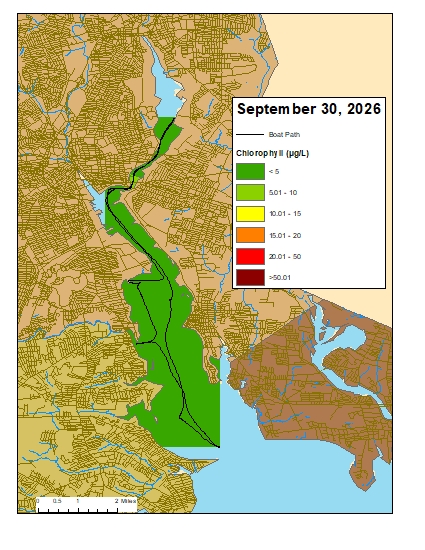
Surface chlorophyll data were collected on April 29, 2026, while the R/V Data Stream was underway collecting bacteria samples in the Providence and Seekonk River Estuaries. The average chlorophyll concentrations were categorized as good in all areas. The average chlorophyll concentrations were also categorized as good over all areas surveyed. Overall, chlorophyll ranged from 1.09 µg/L to 3.94 µg/L with an average of 1.96 µg/L. The chlorophyll concentrations from this date are presented in the map below using Inverse Distance Weighting (IDW) interpolation.
April 15, 2026

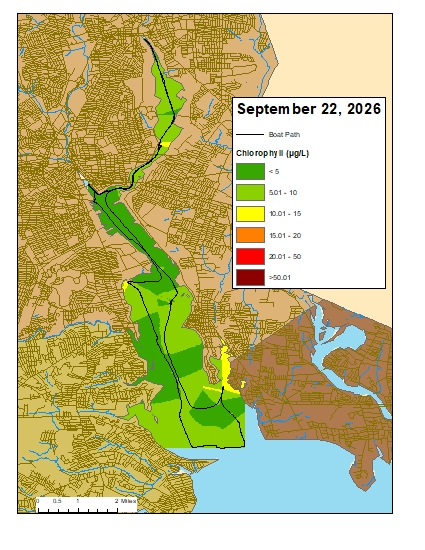
Surface chlorophyll data were collected on April 15, 2026, while the R/V Data Stream was underway collecting nutrient samples in the Providence and Seekonk River Estuaries. The average chlorophyll concentrations were categorized as fair in all areas. The average chlorophyll concentrations were also categorized as fair over all areas surveyed. Overall, chlorophyll ranged from 1.67 µg/L to 44.92 µg/L with an average of 13.52 µg/L. The chlorophyll concentrations from this date are presented in the map below using Inverse Distance Weighting (IDW) interpolation.
October 15, 2025

Surface chlorophyll data were collected on October 15, 2025, while the R/V Monitor was underway collecting nutrient samples in the Providence and Seekonk River estuary. The average chlorophyll concentrations were categorized as good in all areas. The average chlorophyll concentrations were also categorized as good over all areas surveyed. Overall, chlorophyll ranged from 0.64 µg/L to 3.60 µg/L with an average of 1.57 µg/L. The chlorophyll concentrations from this date are presented in the map below using Inverse Distance Weighting (IDW) interpolation. 
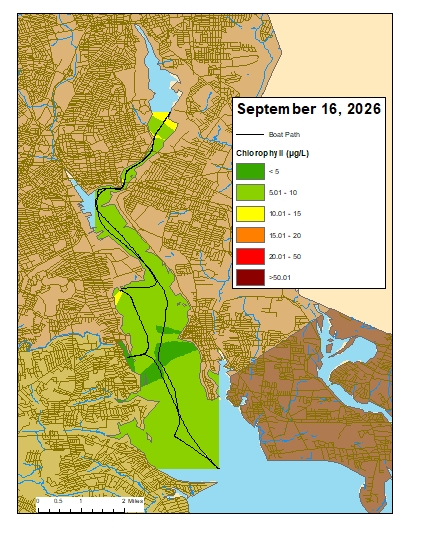
October 1, 2025

Surface chlorophyll data were collected on October 1, 2025, while the R/V Monitor was underway collecting nutrient samples in the Providence and Seekonk River estuary. The average chlorophyll concentrations were categorized as fair in the Seekonk River, and as good in all other areas. The average chlorophyll concentrations were categorized as good over all areas surveyed. Overall, chlorophyll ranged from 2.07 µg/L to 10.16 µg/L with an average of 4.94 µg/L. The chlorophyll concentrations from this date are presented in the map below using Inverse Distance Weighting (IDW) interpolation. 
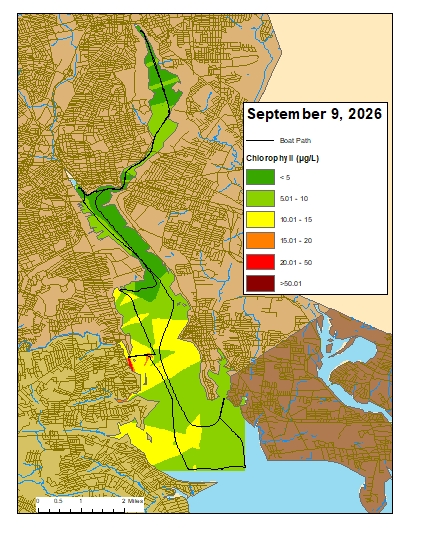
September 17, 2025

Surface chlorophyll data were collected on September 17, 2025, while the R/V Monitor was underway collecting nutrient samples in the Providence and Seekonk River estuary. The average chlorophyll concentrations were categorized as good in the Northern Providence River Channel and the Seekonk River, and as fair in all other areas. The average chlorophyll concentrations were categorized as fair over all areas surveyed. Overall, chlorophyll ranged from 0.98 µg/L to 20.49 µg/L with an average of 6.73 µg/L. The chlorophyll concentrations from this date are presented in the map below using Inverse Distance Weighting (IDW) interpolation. 
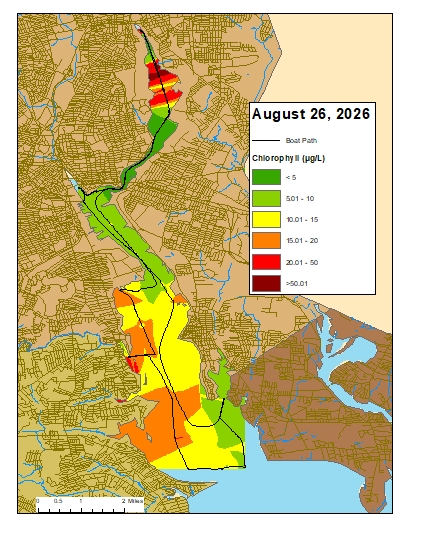
September 10, 2025

Surface chlorophyll data were collected on September 10, 2025, while the R/V Monitor was underway collecting nutrient samples in the Providence and Seekonk River estuary. The average chlorophyll concentrations were categorized as good in the Northern Providence River Channel and the Seekonk River, and as fair in all other areas. The average chlorophyll concentrations were categorized as fair over all areas surveyed. Overall, chlorophyll ranged from 1.34 µg/L to 36.38 µg/L with an average of 6.79 µg/L. The chlorophyll concentrations from this date are presented in the map below using Inverse Distance Weighting (IDW) interpolation. 
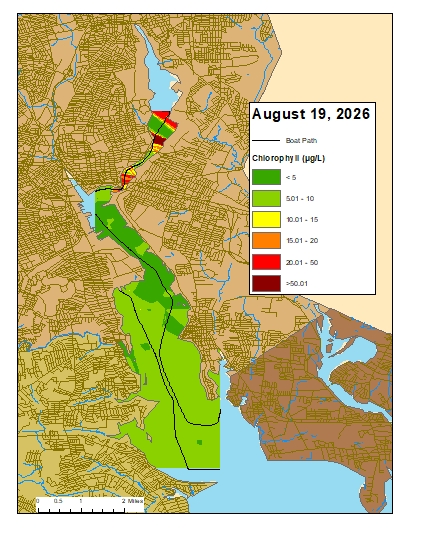
September 3, 2025

Surface chlorophyll data were collected on September 3, 2025, while the R/V Monitor was underway collecting nutrient samples in the Providence and Seekonk River estuary. The average chlorophyll concentrations were categorized as good in the Southern Providence River Channel, poor in the Seekonk River, and as fair in all other areas. The average chlorophyll concentrations were categorized as fair over all areas surveyed. Overall, chlorophyll ranged from 2.31 µg/L to 38.36 µg/L with an average of 11.11 µg/L. The chlorophyll concentrations from this date are presented in the map below using Inverse Distance Weighting (IDW) interpolation. 
August 27, 2025

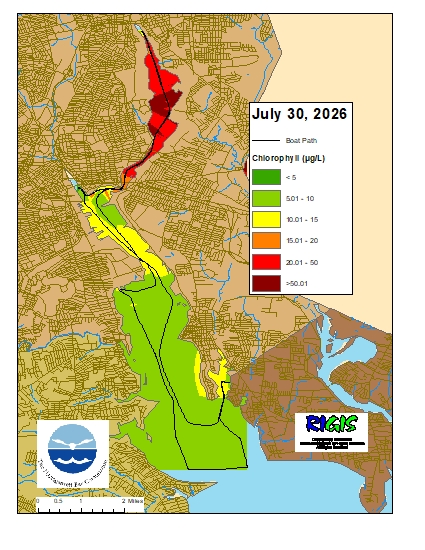
Surface chlorophyll data were collected on August 27, 2025, while the R/V Monitor was underway collecting nutrient samples in the Providence and Seekonk River estuary. The average chlorophyll concentrations were categorized as good in the Northern Providence River Channel, poor in the Seekonk River, and as fair in all other areas. The average chlorophyll concentrations were categorized as poor over all areas surveyed. Overall, chlorophyll ranged from 1.43 µg/L to 610.7 µg/L with an average of 30.00 µg/L. The chlorophyll concentrations from this date are presented in the map below using Inverse Distance Weighting (IDW) interpolation. 
August 13, 2025

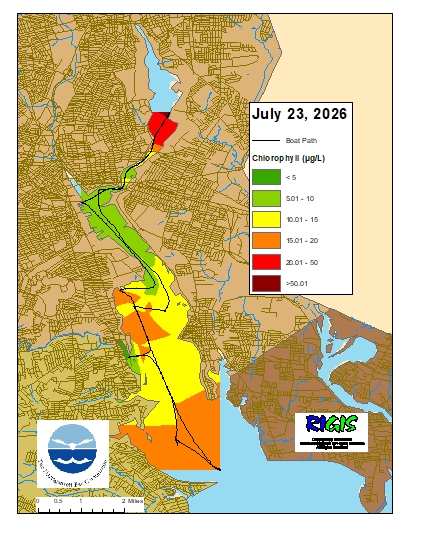
Surface chlorophyll data were collected on August 13, 2025, while the R/V Monitor was underway collecting nutrient samples in the Providence and Seekonk River estuary. The average chlorophyll concentrations were categorized as poor in the Seekonk River, and as fair in all other areas. The average chlorophyll concentrations were categorized as poor over all areas surveyed. Overall, chlorophyll ranged from 2.01 µg/L to 610.0 µg/L with an average of 21.56 µg/L. The chlorophyll concentrations from this date are presented in the map below using Inverse Distance Weighting (IDW) interpolation. 

Scroll to Top